
Ever feel like you’re playing a game of Tetris every time you move around your bathroom? You’re not imagining it. Many Australian bathrooms are compact by global standards, and even small miscalculations can make a space feel awkward or cramped. Understanding average bathroom dimensions is the foundation of a bathroom that feels comfortable, functional, and well planned—whether you’re renovating, building, or simply assessing what’s possible.
While there’s no single “perfect” bathroom size, there are widely accepted standards used by designers and builders across Australia. In addition to what has been stated, these dimensions are based on ergonomics, building codes, and decades of practical experience. Knowing them early helps you avoid layout mistakes, unrealistic expectations, and costly redesigns later on.
This guide explains standard bathroom sizes, fixture clearances, layout logic, and smart strategies for making smaller spaces work—while keeping future usability firmly in mind.
Average Bathroom Dimensions by Bathroom Type in Australia
Australian homes generally include one or more of three bathroom types. Each serves a different purpose, which directly influences its size, layout, and fixture choices.
Common bathroom types and their roles
-
Powder room (WC): Guest use, minimal fixtures
-
Ensuite: Private bathroom attached to a bedroom
-
Main or family bathroom: Serves the household, often includes a bath
Typical size benchmarks
While every home varies, these figures represent common planning standards used across Australia:
-
Powder room: ~1.2m × 1.5m (1.8 sqm)
-
Standard ensuite: ~2.0m × 2.5m (5 sqm)
-
Main/family bathroom: ~2.5m × 3.0m (7.5 sqm)
Thus, these numbers align with what many builders and designers consider practical minimums for comfort. However, size alone doesn’t determine usability. A poorly planned 8 sqm bathroom can feel tighter than a well-designed 5 sqm one.
Professionals such as RJG Group regularly see that layout efficiency matters just as much as raw square metreage when assessing bathroom performance.
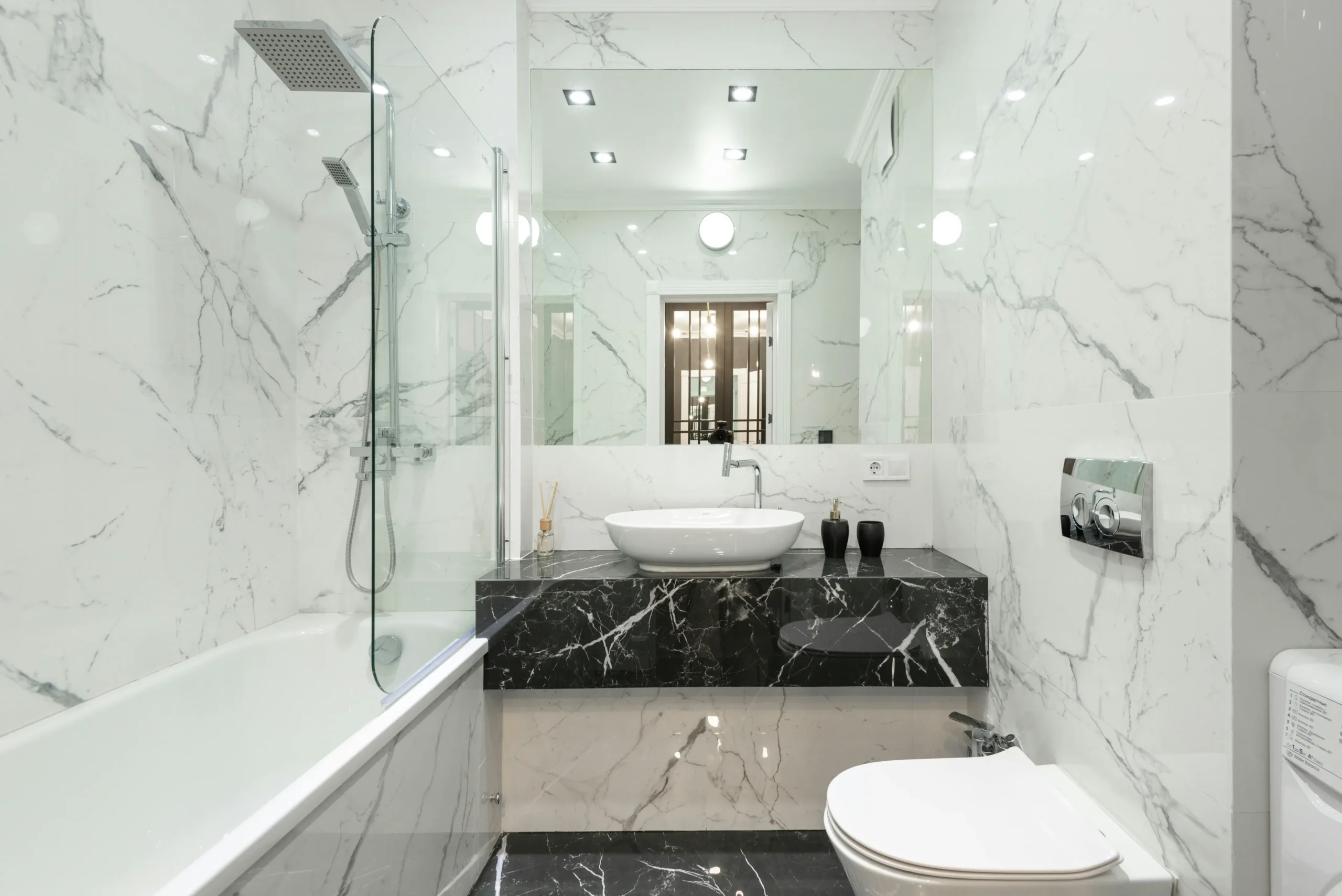
Average Bathroom Dimensions and Why Clearance Matters More Than Size
Clearance is the invisible factor that makes or breaks a bathroom. It refers to the free space required around fixtures so they can be used safely and comfortably.
Australian standards and industry best practices—supported by guidelines recognised by the master builders association—define these clearances to reduce injury risk and improve daily usability.
Key clearance guidelines include:
-
Toilet width: 750–800mm minimum
-
Clear space in front of toilet: 600mm
-
Vanity standing space: 700mm minimum
-
Shower entry clearance: At least 700–900mm
Ignoring these clearances leads to tight pinch points, awkward movement, and long-term frustration—especially in family bathrooms.
Average Bathroom Dimensions for Fixtures and Layout Planning
Fixtures don’t exist in isolation. Their size, placement, and relationship to each other determine how the bathroom functions as a whole.
Showers and toilets: the core layout drivers
-
Standard shower: 900mm × 900mm
-
Rectangular shower: 900mm × 1200mm (requires more clearance)
-
Toilet projection: ~650–700mm from wall
The most common layout mistake is crowding fixtures without allowing for real-world movement—stepping out of the shower, bending at the vanity, or opening doors.
Specialists like RJG Group often recommend planning the layout from the doorway inward, ensuring clear traffic flow before committing to fixture positions.
Average Bathroom Dimensions and Bath Space Requirements
Bathtubs are often the largest single item in a bathroom and require careful planning.
-
Standard built-in bath: ~1700mm long
-
Compact bath: ~1500mm (less comfortable for adults)
Freestanding baths, while visually striking, require additional clearance:
-
100–150mm minimum on all sides for cleaning and maintenance
This extra “breathing room” increases the bath’s effective footprint and can significantly impact smaller bathrooms. Built-in baths remain the most space-efficient option when dimensions are tight.
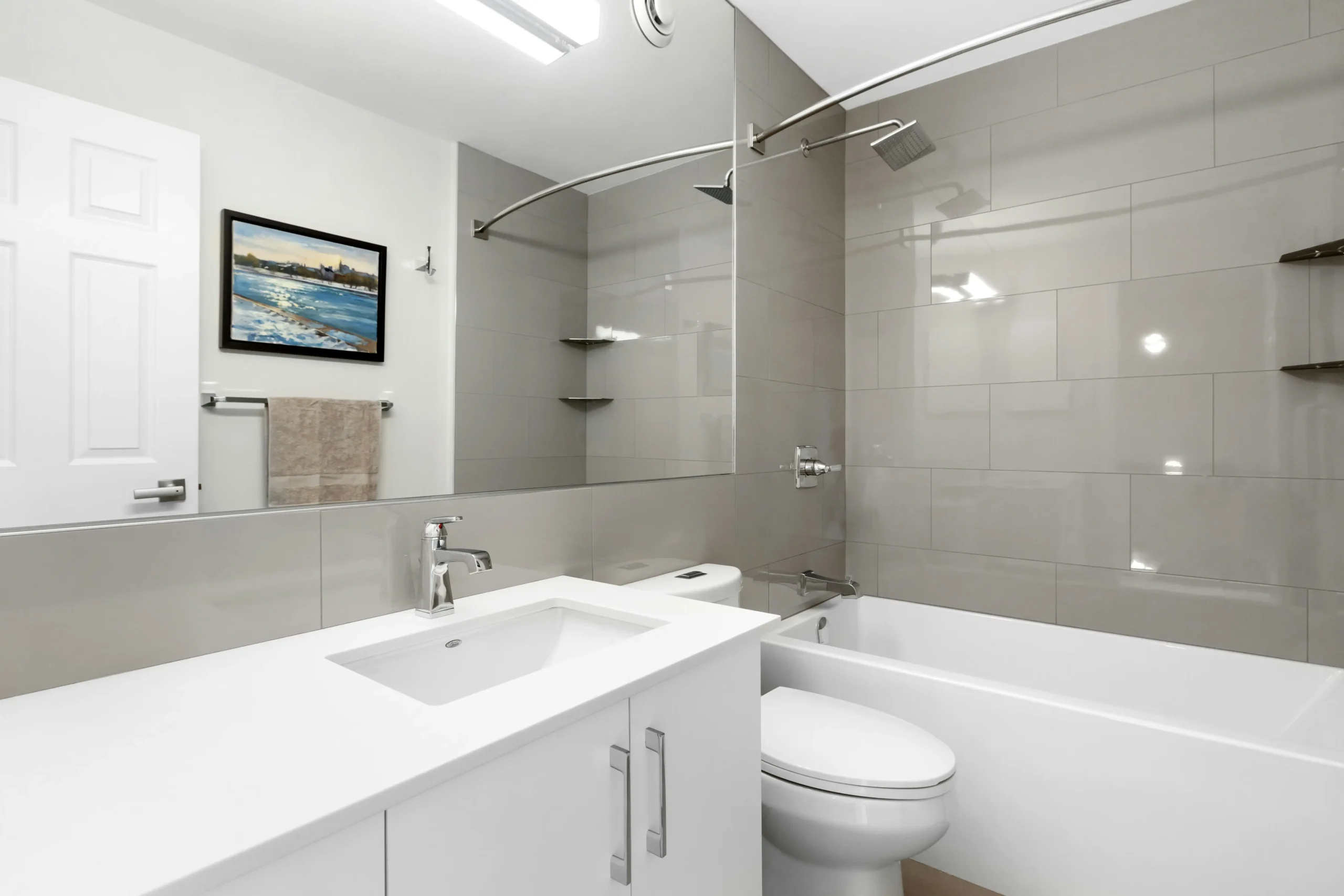
Small and Narrow Spaces
If your bathroom falls below the national average, thoughtful design becomes even more important. Furthermore, small bathrooms aren’t failures—they simply demand smarter choices.
Three proven strategies for compact bathrooms
-
Corner showers
A 900mm × 900mm corner shower frees wall space and improves circulation. -
Wall-hung vanities
Floating cabinetry exposes floor area, making the room feel larger and simplifying cleaning. -
In-wall cisterns
Concealed toilet tanks save 100–150mm of depth and create a cleaner visual line.
These strategies are frequently used by RJG Group to help homeowners maximise functionality without increasing the room’s footprint.
Future-Proofing Your Layout
A well-designed bathroom should work not just today, but years from now. Moreover, planning for accessibility doesn’t mean compromising style—it means designing intelligently.
Future-focused considerations include:
-
Doorway width: 850mm clear opening
-
Step-free shower base: Eliminates trip hazards
-
Reinforced walls: Allows grab bars to be added later
These features improve safety, usability, and resale value, making them a smart investment even if accessibility isn’t immediately required.
Quick Reference: Average Bathroom Dimensions Cheat Sheet
Australian bathroom planning rules of thumb
-
Main bathroom: ~2.5m × 3.0m
-
Ensuite: ~2.0m × 2.5m
-
Powder room: ~1.2m × 1.5m
-
Toilet width: 800mm
-
Front clearance (toilet/vanity): 600–700mm
-
Standard shower: 900mm × 900mm
-
Freestanding bath clearance: 100–150mm all sides
Turn Measurements Into a Plan
The most powerful step you can take is also the simplest: measure your bathroom accurately. In addition, comparing your space against these benchmarks turns vague ideas into a practical plan and helps you see what’s achievable without guesswork.

If you’re planning a renovation or want expert advice on layouts that genuinely work, Contact us at RJG Group. Finally, our experience in bathroom planning and construction can help you transform dimensions on paper into a space that feels right every day.





 Defining Modern Excellence with Integrity


